

The past shaped you. It does not have to keep deciding for you.

I am a childhood trauma therapist working with adults throughout Virginia who are still being shaped by what happened in their early years. Whether the wound came from abuse, neglect, a chaotic home, or the slower harm of growing up without the care that was needed, I work at the level where those experiences actually live, using EMDR, somatic therapy, IFS, psychodynamic therapy, and clinical hypnosis.


Most adults who carry childhood trauma do not think of themselves as trauma survivors. They think of themselves as anxious, or reactive, or difficult in relationships, or unable to fully trust people, or just somehow stuck in ways they cannot explain. The connection to what happened earlier in life is often not obvious until someone starts looking for it.
What childhood experiences leave behind is not usually a set of dramatic memories. It is a nervous system that learned how to survive a particular environment, a set of conclusions about what is safe and what is not, and relational patterns that made sense then and create real problems now. The anxiety, the self-criticism, the hypervigilance, the difficulty feeling close to people, these are not personality flaws. They are what the childhood environment required.
Childhood trauma therapy is not about going back. It is about reaching the parts of you that are still living there.

Childhood trauma therapy may be a good fit if you:
How Childhood Trauma Therapy Works
Childhood trauma therapy does not follow a single protocol. It follows the person. Here is what the work actually involves:

The nervous system learned what it learned. It can learn something different.

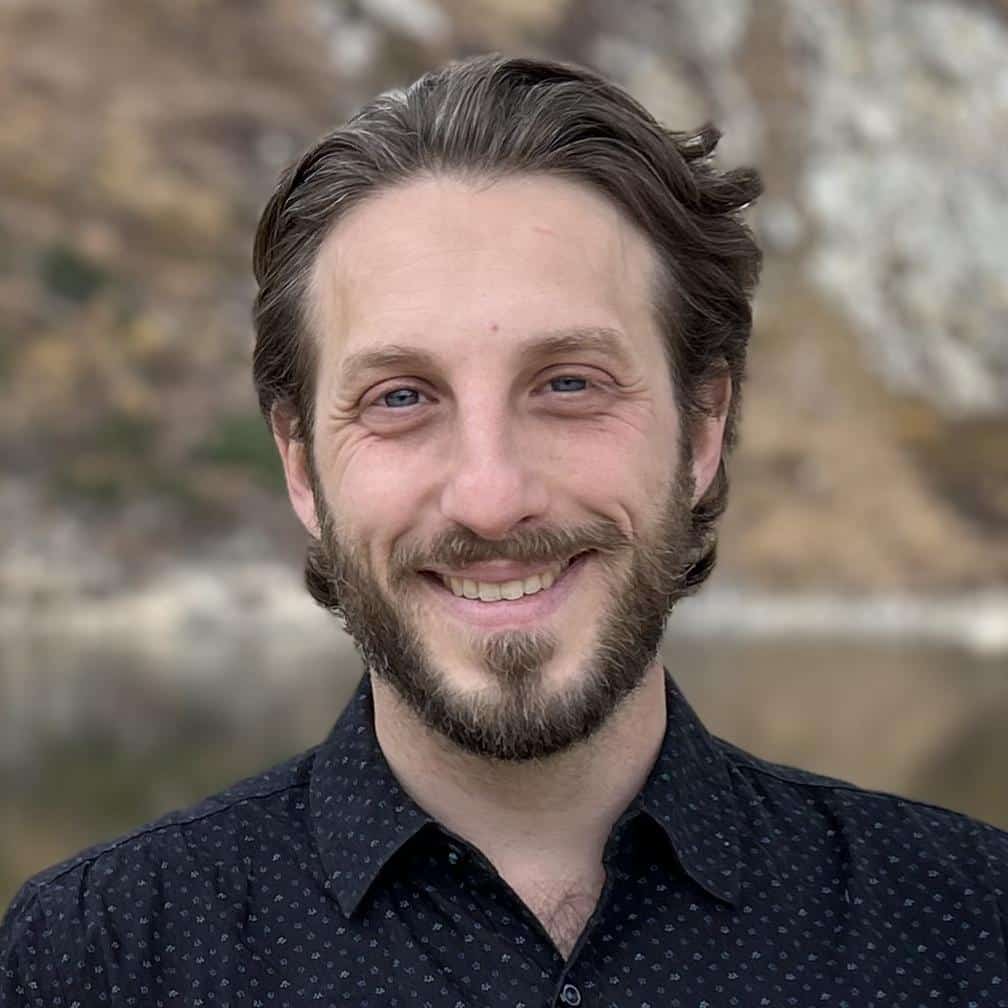
Hello. I’m Micah.
I became a therapist because I understood from my own life what it means to carry things that do not announce themselves as trauma. The anxiety that runs without a clear cause. The reactions that seem too big for the moment. The sense that something is unfinished. It was not until I found approaches that worked at a different level than conscious understanding that things actually shifted. That experience is behind everything I do now.
I am a licensed professional counselor working with adults throughout Virginia who are healing from childhood trauma in all its forms, including abuse, neglect, attachment wounds, developmental trauma, religious trauma, and the slower harm of growing up in emotionally unavailable or unpredictable homes. I hold an Advanced Certification in Complex Trauma and Dissociative Disorders from ISSTD, which shapes how carefully and slowly I approach this work. My graduate training is from William and Mary.
The people I work with are usually thoughtful, self-aware, and have often tried to work through things before. They come because something is not shifting with understanding alone. That is exactly what this is for.

What I Offer:

Childhood trauma is not a single experience, and it does not live in a single place. Some of it is in memories. Some of it is in the body. Some of it is in the relational patterns that formed around it and were never updated. That is why effective treatment draws on more than one approach. Here is what the work actually looks like in my practice:
EMDR is one of the most researched trauma treatments available. It uses bilateral stimulation to help the brain reprocess memories that are stored in a way that keeps them emotionally active, as if the event is still happening rather than in the past. For childhood trauma, this is particularly important because many early experiences are not stored as clear narratives. They live in the nervous system as emotional states, body sensations, and automatic reactions. EMDR works directly with that material.
What this looks like in sessions:
Childhood trauma does not only live in thought and memory. It lives in the body, in the chronic tension that does not release, the way breath shortens in certain conversations, the automatic physical responses that happen before thinking catches up. Somatic therapy works directly with what the body is holding, which is often where childhood trauma is most durably stored and least accessed through talk alone.
What this looks like in sessions:
IFS understands the inner world as a system of parts, some of which carry the pain of childhood experiences and some of which are formed to protect against that pain. The self-criticism, the people-pleasing, the emotional shutdown, these are not flaws. They are protective parts that learned their jobs in childhood and have not had the chance to update. IFS works with those parts directly, with curiosity and compassion rather than trying to override or eliminate them.
What this looks like in sessions:
Childhood trauma almost always has a relational dimension. It happens in relationships, and its effects show up most clearly in relationships. Psychodynamic therapy pays close attention to the relational patterns that formed in early life and how they are showing up now, including in the therapy relationship itself. That focus makes it particularly effective for attachment wounds, relational trauma, and the stronger identity-level effects of childhood harm.
What this looks like in sessions:
Some of what childhood trauma leaves behind is not accessible through ordinary conversation. It is stored in deeper layers of experience, below the level of conscious reasoning. Clinical hypnosis creates a focused, relaxed state that makes those layers more directly reachable. It is not what people imagine from television. There is no loss of control, no suggestions without consent, and no blankness. It is a deepened state of attention in which older material can be gently approached and reworked.
What this looks like in sessions:
Trauma-focused CBT addresses the thought patterns and behavioral responses that developed around traumatic experiences. For some people and some presentations, a structured, skills-based approach is the right entry point. TF-CBT provides concrete tools for emotional regulation, distress tolerance, and the gradual processing of traumatic material within a clear framework. I use it when it is the right fit for what someone is carrying, not as a default protocol for everyone.
What this looks like in sessions:

People searching for childhood trauma treatment often come across several other approaches. Here is a brief overview of what these are and how the work I offer addresses the same needs.
Cognitive Processing Therapy is a structured, protocol-based approach originally developed for PTSD that focuses on identifying and challenging the specific beliefs that trauma produced. It is particularly focused on stuck points, the thoughts that keep trauma feeling unresolved. I do not offer CPT as a standalone protocol, but the work I do addresses the same territory. Through EMDR, IFS, and psychodynamic approaches, I work directly with the beliefs and conclusions that childhood trauma formed, at the emotional level where those beliefs actually live, rather than through structured written exercises alone.
Prolonged Exposure is a structured treatment for PTSD that involves gradual, repeated exposure to traumatic memories and avoided situations to reduce avoidance and emotional reactivity. It has a strong evidence base for single-incident trauma and PTSD. For complex childhood trauma, which is rarely a single incident and involves relational as well as nervous system dimensions, exposure-based work is most effective when embedded in a broader relational and somatic framework. The EMDR and somatic approaches I use address the same goals, with particular attention to the pacing that complex trauma requires.
DBT is a skills-based approach that focuses on emotional regulation, distress tolerance, interpersonal effectiveness, and mindfulness. It is often used with people who have significant emotional dysregulation alongside a trauma history. I do not offer a full DBT program, but the stabilization phase of childhood trauma work addresses overlapping ground. I help people build the internal capacity to manage difficult emotional states before and during deeper processing, which is the same foundation DBT is designed to establish. If someone needs a full DBT program, I can provide referrals to practitioners who specialize in it.

Childhood trauma takes many forms. What these experiences share is that they happened during a time when the brain and nervous system were still forming, and the effects get carried into adult life in ways that are often hard to trace back to where they started. Below are the types of childhood trauma I work with most often.
Physical abuse, emotional abuse, and childhood sexual abuse each leave their own marks, but they all share a common thread: they happened in a relationship, often with people who were supposed to be safe. Childhood physical abuse and childhood sexual abuse are among the most studied forms of early harm, and their effects reach into nearly every part of adult life. What gets left behind is not just the memory. It is what that experience taught the body and mind about what to expect from other people, and about what you are worth.
Neglect is often the hardest to name because it is defined by what was absent rather than what happened. There was no one consistent to turn to. Emotional needs went unmet or unacknowledged. The message received, never stated directly, was that needs were too much, or not worth responding to. Childhood emotional neglect leaves adults who minimize their own needs, struggle to identify what they feel, or find themselves chronically unsure whether their experience is valid. It is one of the most common forms of early harm and one of the least recognized.
Attachment trauma forms when the early caregiving relationship was inconsistent, frightening, or chronically unavailable. Developmental trauma refers to the cumulative impact of adverse experiences during the years when the brain, nervous system, and sense of self are still forming. Neither requires a single dramatic event. Both are about what happened over time, and what was missing over time, in environments that were supposed to provide safety. The effects show up in adulthood as difficulty with emotional regulation, chronic anxiety, relational patterns that feel compelled, and a sense of self that shifts depending on who else is in the room.
When a parent’s emotional needs consistently came before the child’s, the child learns early to monitor, accommodate, and suppress. Adults who grew up with a narcissistic parent or an emotionally immature parent often describe a childhood that looked fine from the outside, while something critical was missing on the inside. They may have been parentified, required to manage the emotional state of a caregiver rather than simply being a child. What gets carried into adulthood is an overactive sense of responsibility for others, difficulty with boundaries, and an exhausting vigilance around other people’s moods.
Religious trauma develops when faith communities or spiritual authorities use fear, shame, coercion, or control in ways that harm rather than sustain. Adults healing from religious trauma often navigate a particular kind of grief: the loss of a community and belief system that was central to their identity, alongside the harm that same system caused. This work requires a therapist who can hold both dimensions without dismissing either one. I take the grief and the harm equally seriously.
Children who grow up with an alcoholic parent, a parent with substance use struggles, or a parent with serious mental illness often become hyperattuned to that parent’s emotional state as a survival strategy. The home is unpredictable. Safety depends on reading the room correctly. These children often become highly capable, responsible adults who carry significant anxiety, who cannot fully relax their vigilance, and who have internalized the belief that they are responsible for managing situations that were never theirs to manage.
Some childhood harm does not come from a single source but from the overall environment of the family system. Chronic conflict, emotional unpredictability, family secrets, scapegoating, enmeshment, or an atmosphere where certain things could never be said all constitute the kind of chronic relational stress that shapes development. Adults from these families often internalize the dysfunction without fully recognizing it as harm, and may find themselves recreating similar dynamics in their adult relationships while working hard to be nothing like the family they came from.
Experiences of early abandonment, rejection, or significant loss during childhood leave adults with particular sensitivities around closeness and the possibility of being left. Fear of abandonment can drive patterns of clinging or protective distance, difficulty trusting that relationships will hold, and a persistent low-level anticipation that people they care about will leave. This is not irrational. It is the nervous system accurately reporting what it has experienced and attempting to protect against it happening again.

The effects of childhood trauma rarely stay contained in memory. They live in the body, in patterns of relating, in automatic reactions, and in the conclusions people drew about themselves and the world during years when those conclusions felt like the only possible ones. Here are the most common ways unresolved childhood trauma shows up in adulthood.
For many adults with a childhood trauma history, anxiety is not primarily a thought problem. It is a bodily state. A nervous system that learned to stay alert because that alertness served a real function once. Hypervigilance, the persistent scanning for threat, the difficulty relaxing even when things are objectively safe, the physical tension that does not release: these are the legacy of a childhood environment that required the nervous system to stay on. Therapy works with the nervous system directly, not just the thoughts that accompany it.
Shame is one of the most common and most painful effects of childhood trauma. When a child is harmed, neglected, or consistently made to feel too much or not enough, the conclusion drawn is rarely about the adult who failed them. It is about themselves. The beliefs formed in that process, that something is fundamentally wrong with me, that I have to earn my place with people, operate in adulthood as facts rather than interpretations. They drive self-criticism, perfectionism, and the persistent sense that whatever is achieved is never quite enough.
The attachment patterns formed in early childhood become the template for adult relationships. Adults with insecure or disorganized attachment often find themselves cycling between closeness and distance, struggling to trust that relationships are safe, choosing partners who replicate familiar dynamics, or maintaining such careful distance that real intimacy never becomes possible. These are not character flaws. They are attachment strategies that formed in response to specific relational environments and have outlasted the contexts that created them.
Dissociation is the mind’s way of creating distance from experience that is too overwhelming to process. In childhood, it is often an adaptive response to abuse, neglect, or frightening experiences that have nowhere else to go. In adulthood, it can show up as feeling detached from yourself or your surroundings, gaps in memory, emotional numbness, a sense of watching yourself from outside, or difficulty staying present in your own life. I hold an Advanced Certification in Complex Trauma and Dissociative Disorders from ISSTD, which directly shapes how I approach this work.
Depression connected to childhood trauma often carries grief that was never named. The weight of experiences that were never processed. The accumulated impact of what was missing during the years that mattered. People describe it as a flatness, a sense of going through the motions, a tiredness that sleep does not touch. This kind of depression does not always respond to approaches focused on the present alone. It needs something that can reach what is underneath.
When childhood involves chronic harm, emotional unavailability, or environments where a child’s inner experience was consistently ignored or overridden, the development of a stable sense of self is disrupted. Adults from these backgrounds often describe not quite knowing who they are outside of how they relate to others, a self that shifts depending on who is in the room, difficulty knowing what they actually want, or a pervasive sense of not belonging anywhere. Identity-level wounding is some of the deepest the work reaches, and it requires patience, trust, and real time.
The first session is not where the harder work begins. It is where we find out if working together makes sense. Here is what it usually involves:
Safety and trust come first. For some people, that is established relatively quickly. For others, particularly those whose early experiences involved relational harm, building that foundation is the beginning of the work. The goals of that first session are simple: understand what brought you in, hear how I work, and decide together whether this feels like the right fit. Nothing moves faster than the relationship beneath it can hold.


This is not therapy. It is just an invitation to notice something, with no pressure to do anything about it yet.
Think of a reaction you have had recently that felt larger than the situation seemed to call for. An irritation that turned into something sharper. A moment of anxiety that did not quite match the stakes. A pull toward distance when something felt too close. Without trying to explain or fix it, just notice: how familiar does that reaction feel? How long has it been around? See if you can stay with the question without needing an answer. That quality of honest, unhurried attention is close to the spirit of this work.
Childhood trauma is not always what people expect it to be. It includes things that are obviously harmful, like physical abuse, sexual abuse, or witnessing violence in the home. And it includes things that are harder to name, like growing up with a caregiver who was unpredictable or unavailable, or emotional neglect, where no one was really there. Trauma does not require a single dramatic event. It can be shaped by what happened over and over, or by what was consistently absent, during years when the brain and nervous system were still forming.
Examples include physical abuse, emotional abuse, sexual abuse, childhood neglect, witnessing domestic violence, growing up with a parent struggling with substance abuse, addiction, or serious mental illness, chronic household instability, loss of a parent through death or abandonment, parentification, bullying, racial trauma, religious or spiritual abuse, medical trauma, eating disorders that developed as a coping response, and the chronic stress of growing up in poverty or an unsafe community. Developmental trauma and attachment trauma describe the cumulative effect of difficult relational experiences across childhood rather than a single event.
Not every hard childhood experience becomes trauma. What matters is how it was processed and what support was available around it. A child who goes through something frightening but has a consistent, attuned adult to help them make sense of it is in a very different position than a child who faces that same experience alone. Childhood trauma is less about the event and more about the environment around the event: whether the child was believed, protected, comforted, and helped to understand what happened.
Childhood trauma rarely shows up in adulthood as clear memories of what happened. More often, it shows up as patterns. Intrusive thoughts or images that surface without warning. Avoidance of places, people, or situations that feel threatening without an obvious reason. Anxiety and stress that do not match what is actually happening in the present. Intense emotional reactions that seem too large for the moment. Persistent shame or self-criticism. Difficulty trusting others or feeling safe in close relationships. Physical signs like chronic tension, fatigue, or pain with no clear medical cause. A sense of being disconnected from your own body. These are not character flaws. They are what survival looked like.
One of the clearest signs is the gap between what you understand and what you feel. Many people can trace exactly where their patterns came from. They can explain their anxiety, their reactions in relationships, and the voice that says they are not enough. And yet the patterns stay the same. Understanding something and being free of it are different things. The body often holds what the mind has already moved past, and that gap is usually where the unresolved material lives.
Childhood trauma is connected to a wide range of mental health conditions in adulthood. Post-traumatic stress disorder (PTSD) and complex PTSD (CPTSD) are the most directly linked. Dissociative disorders, including dissociative identity disorder (DID), often trace back to early childhood trauma, particularly when the harm was chronic and relational. Depression, anxiety disorders, panic disorder, and borderline personality disorder also frequently have roots in early adverse experience. These conditions are not separate from the trauma. They are often how the effects of that trauma get organized and expressed in a person’s daily life.
The brain develops rapidly during childhood, and chronic fear, stress, and relational harm during those years leave real marks. The parts of the brain responsible for reading threat, regulating emotion, and forming memories are all shaped by early experience. The result is often a nervous system that stays on high alert long after the original danger has passed, stress responses that activate quickly and take a long time to settle, and difficulty with the flexible, connected thinking that makes daily life and relationships easier. This is not a character flaw. It is what growing up in a difficult environment requires of the brain.
Childhood is when the brain learns what to expect from the world. Not through conscious reasoning, but through lived experience. What relationships feel like. Whether needs get met. Whether the environment is safe or dangerous. Those lessons get wired in deeply, and they shape how a person moves through adulthood, how they read situations, how they respond to stress, and what they expect from the people close to them. These are not just memories. They are the operating system, running in the background of daily life in ways that often feel automatic rather than chosen.
Memory is not a recording. It is a reconstruction, and trauma memory works differently from ordinary memory. Some experiences from childhood are stored in the body and nervous system rather than as a clear narrative, which means they do not surface as a story but as physical sensations, emotions, or reactions. They may emerge later in life when something in the present activates the stored material, when a person reaches a point of safety that makes it possible to feel what could not be felt before, or through the gradual process of therapy. Partial or fragmented memory is common. It is not a sign that the experience was not real.
Childhood trauma therapy is not only for people with a formal diagnosis or a dramatic history. It is for anyone whose early life is still showing up in their present one. If you carry patterns of anxiety, shame, or self-criticism that predate anything obviously wrong in your current life, if you find yourself in the same relational dynamics across different people and contexts, if something from the past seems to be running things and you cannot reach it through understanding alone, this work is relevant. It does not require certainty that what happened was bad enough to count.
Childhood trauma affects people across all backgrounds, but certain things make lasting harm more likely. Ongoing harm rather than a single incident. The absence of a safe adult who could help the child make sense of what was happening. Harm that came from a caregiver rather than a stranger. Early age of onset. Lack of community, stability, or resources to buffer the impact. Adults carrying complex trauma histories, including CPTSD and dissociative conditions, are among those most significantly affected and often benefit most from a therapist with specific training in those areas.
When looking for a childhood trauma therapist in Virginia, clinical licensure is the baseline. Beyond that, look for specific training in trauma-focused therapy, a clear explanation of how they actually work, and a sense of personal fit from the first conversation. That last one matters more than people often expect. The therapeutic relationship is part of the treatment itself, so feeling safe with the person matters as much as their credentials. I offer a free consultation specifically so we can assess that together, without any pressure in either direction.
There is no single right moment. Some people come when a specific life event, a relationship ending, becoming a parent, or a loss, activates something that has been managed but never resolved. Others come when the weight of carrying it makes everyday functioning harder. Others come when they recognize they keep repeating the same patterns and want something to actually change rather than just continue. The most common thing that gets in the way is the belief that what happened was not bad enough. That belief is usually part of what the trauma produced.
A lot of people who grew up in genuinely difficult environments have minimized it for so long that it feels strange to call it trauma. It did not look dramatic. They were told it was normal. Someone else had it worse. There is also often a fear that opening it up will make things worse or that a therapist will not be able to handle what they bring. Those are real concerns. What I can say directly is that I have worked in crisis, residential, and intensive outpatient settings, and I built this practice specifically for people carrying complex and difficult histories. Whether something counts as trauma is less important than whether the effects on your life are real.
Yes. The effects of childhood trauma are not permanent. The nervous system is not fixed. Patterns that formed in response to early experience can shift when they are approached at the level where they actually live. Healing does not mean the past is erased. It means it loses its grip. Memories become something that can be held without being pulled back into them. Reactions become something that can be noticed and responded to rather than something that just happens. Relationships become something that can be navigated with more freedom and less fear.
Yes, and the research on this is solid. EMDR is highly effective for trauma and is one of the most studied interventions available. Somatic therapies, IFS, and psychodynamic therapy also have meaningful support for their effectiveness with trauma and its long-term effects. What matters most is not which single approach is used but whether the therapist has real training in trauma, works at the level where the trauma is stored, and moves at a pace that the nervous system can actually integrate.
A trauma therapy session is not what most people picture. There is no reliving. There is no pressure to go further than feels manageable. The work begins with building enough safety that deeper material can be approached without overwhelming the nervous system. From there, trauma therapy sessions move between processing what has been stored, developing the capacity to manage difficult states, and integrating what has shifted into a more coherent sense of self and life. In practice, those phases are not linear. A given session might touch all three depending on what someone needs that day. Several trauma therapy options address this work from different angles, and the right combination depends on what each person is carrying.
EMDR uses bilateral stimulation to help the brain reprocess traumatic memories that are still emotionally active, bringing them into the past where they belong. Somatic therapy works with what the body is still holding: chronic tension, freeze responses, and disconnection from physical experience. IFS works with the protective parts formed in childhood and the exiled parts still carrying the pain. Psychodynamic therapy addresses the relational patterns and deeper beliefs that early experience produced. These approaches work on the same material from different directions and are more effective together than any single method used alone.
Cognitive Processing Therapy (CPT) is a structured approach that works directly on challenging negative beliefs and distorted thoughts that trauma produced, helping people examine and update the conclusions that kept them stuck. Prolonged exposure and DBT-integrated trauma treatment are also widely used: prolonged exposure reduces avoidance and emotional reactivity through gradual, safe contact with difficult material, and DBT-integrated approaches build emotional regulation and coping strategies for people who need more stabilization before processing can begin. These are legitimate trauma therapy options, and I can speak to how they compare to what I offer. I use EMDR, somatic therapy, IFS, and psychodynamic approaches to address the same territory, integrated based on what each person needs rather than a fixed protocol.
Individual sessions are 53 minutes. Most people start with weekly sessions and adjust frequency from there based on what the work calls for and what is sustainable. Some find that more frequent sessions during an intensive period support deeper progress.
This depends on the complexity and duration of what you are working with, how long it has been present, whether dissociation is part of the picture, and how the nervous system responds to the work. Some people notice real shifts within a few months. Others are doing work that takes longer. Childhood trauma, particularly developmental or complex trauma, is not typically a short-term intervention. The work tends to go deep, and depth takes time. There is no standard program or fixed number of sessions.
Sometimes, yes. When material that has been held at a distance starts to surface, it can feel more present before it begins to settle. A therapist with solid trauma training is paying attention to this and pacing the work accordingly. The goal is never to overwhelm. Moving carefully, on a foundation of real safety, is what makes the deeper work possible without causing harm. If a trauma therapy session ever feels like too much, slowing down is always an option.
Traditional therapy is often centered on insight, understanding, and cognitive behavioral therapy techniques that help people think differently about their experience. For a lot of people, genuinely useful e. But childhood trauma is frequently stored below the level of language, in the body, in the nervous system, in patterns that were formed before there were words for them. When previous therapy brought understanding, but something still did not shift, that is usually a sign that the work needs to reach a different level. Trauma-focused therapy differs specifically because it is designed to work at the level where that material actually lives, not just the level where it can be understood.
This comes up a lot, and it is worth saying directly: childhood trauma therapy does not require going back through every difficult memory in detail. In my practice, the pace is set by what the nervous system can actually handle, not by a protocol or timeline. There is real work that can happen around building internal resources, developing coping strategies for difficult states, and working with current patterns before any direct contact with past experiences begins. Nothing moves faster than the foundation beneath it can support.
Early relational experiences become the template for how adult relationships feel and work. When those early experiences involved harm, inconsistency, or unavailability, the patterns that developed around them tend to show up later: the pull toward familiar dynamics even when they are clearly harmful, difficulty trusting that closeness is actually safe, the anticipation of abandonment or rejection that shapes behavior before there is any real evidence for it, the oscillation between wanting to be close and needing to pull away. These are not bad choices or character flaws. They are what made sense given what was learned early.
Yes, and it usually does until the underlying material gets addressed. The same patterns repeat across different relationships and different contexts because the source is not the relationship; it is what got formed before them. This is one of the most common things people bring to me: they can see the pattern clearly, they understand where it came from, and they still find themselves inside it. Seeing a pattern and being free of it are different things. That gap is exactly what this work is for.
Children who grew up in military families, lost a parent in combat, or were raised by a parent living with combat-related trauma carry a specific kind of early exposure to fear, loss, and unpredictability. Grief-related trauma from childhood, including the loss of a parent, sibling, or primary caregiver, can have significant developmental effects that are not always recognized as trauma. I work with adults carrying these experiences, and the approaches I use address the specific ways that early loss and fear shape adult functioning, relationships, and sense of self.
Childhood trauma from assault or abuse, including sexual assault, physical abuse, and emotional abuse, is among the most researched areas in trauma treatment. Its effects reach into nearly every part of adult functioning. Beyond relational harm, children who experienced sudden, frightening events during development, such as car accidents, natural disasters, serious injuries, or medical trauma, can also carry significant lasting effects on the nervous system. The approaches I use, EMDR, somatic therapy, and IFS, are highly effective for trauma of all these types, whether the origin was chronic or acute.
Yes. All sessions are conducted online via a secure, HIPAA-compliant video platform. Teletherapy is available to adults located anywhere in Virginia at the time of their session. Online trauma therapy in Virginia provides the same depth and quality of work as in-person therapy, and many people find that the privacy and comfort of their own space actually supports the kind of inward, relational work that trauma therapy involves.
A private space where you will not be interrupted, a reliable internet connection, and a device with both audio and video. You must be located in Virginia at the time of your session. Sessions are conducted through a HIPAA-compliant platform.
Online childhood trauma therapy is available statewide. Trauma therapists in Richmond and the broader Greater Richmond area can access this work through teletherapy, as can communities throughout Northern Virginia, including Arlington, Alexandria, Fairfax, Falls Church, Vienna, McLean, Reston, Leesburg, and Manassas. Hampton Roads and Tidewater communities served include Virginia Beach, Norfolk, Chesapeake, Newport News, and Hampton. I also serve Central Virginia, including Charlottesville and Lynchburg, the Shenandoah Valley, Blue Ridge Highlands, Southwest Virginia, and the Eastern Shore. Local availability is not a barrier. Teletherapy makes this work accessible from wherever you are most comfortable and private.
I am Micah Fleitman, LPC, a licensed professional counselor and certified trauma therapist serving adults throughout Virginia via secure teletherapy. If you are looking for a trauma therapist in Virginia with specific training in complex trauma, EMDR, IFS, and somatic approaches, I offer a free 30-minute consultation where we can talk through your situation and whether this is the right fit.
Book a complimentary 30-Minute Consult