
What happened changed you. It doesn't have to define you.


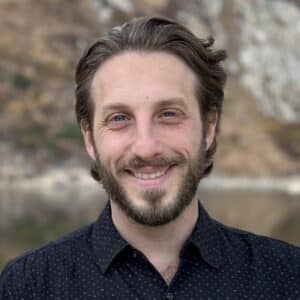
Hi, I’m Micah Fleitman, LPC. I offer online PTSD therapy across Virginia for adults carrying trauma that still affects how safe, connected, or fully themselves they can be. My work draws from EMDR, Internal Family Systems, somatic therapy, and trauma-focused CBT, depending on what feels supportive and right for you.
You may have spent years trying to move forward. Maybe you’ve built a life, taken care of responsibilities, and done everything you could to leave the past behind. From the outside, things may even look okay.
But your body may still brace. Certain sounds, tones, memories, or moments of stillness may bring everything closer than you want it to be. Sleep may not restore you. Relationships may feel harder than they should. The reactions you carry make sense given what you went through. That doesn’t make them any easier to live with.
There is a difference between knowing you are safe and feeling safe.
For many people, it shows up as patterns that feel like personality, not history. Some signs of the past may still be present:
We move at a pace that feels safe enough to trust.
PTSD therapy is not about forcing you to relive what happened or pushing you past what feels manageable. We start by understanding how your reactions have been protecting you, even when they now feel exhausting or confusing.
Depending on what you need, we may work with memories, emotions, protective patterns, beliefs, or the ways trauma still shows up in your body and relationships. The goal is to help you relate to what happened differently, so the past has less control over how you feel, connect, and move through your life.
What I offer:
A free consultation is where we begin. We’ll talk about what you’re carrying, what you’ve tried, and whether the way I work feels like the right fit. No pressure. Just an honest conversation.

Let's create a space where you can feel safe being yourself.

For a long time, shame and fear ran a lot of my life. I didn’t know how to let people care for me, or how to ask. I spent years trying to manage feelings that I now understand were trying to tell me something. Learning to listen to them, rather than fight them, changed everything. That’s the work I do with people now.
I’m a licensed professional counselor with a Master’s in Counseling from the University of William and Mary and training in EMDR, IFS, somatic therapy, and psychodynamic approaches. What I bring to this work is training, experience, and a deep respect for how hard it is to carry something that changes how you see yourself. You deserve a place where all of you are welcome.
PTSD doesn’t always look the way people expect. For many adults, it shows up as patterns that have become so familiar they seem like personality. The constant readiness, the difficulty relaxing, the way certain moments feel unbearable for reasons that are hard to explain.
The tension that never releases, the startle response that fires too easily, the exhaustion that sleep doesn’t fix. Many people with PTSD have learned to push past these physical signals rather than recognize them as information. The jaw that tightens before certain conversations. The chest that constricts in specific environments. The alertness that runs constantly in the background.
This isn’t a character flaw or a habit. It’s what the body learned to do when it needed to stay safe. At some point, that response was protecting something real. The body just hasn’t had the chance to update.
Traumatic memories don’t behave like regular memories. They surface without warning, bringing the emotional intensity of the original event with them. A sound, a smell, a phrase, a time of year. The mind hasn’t filed them as past. It responds as if the threat is still present.
What I often see in this work is that people feel like they are failing somehow because they can’t just move on. But intrusive memories aren’t a sign that something is wrong with you. They’re a sign that something happened that your mind couldn’t fully process at the time. Therapy creates space for those experiences to finally become part of the past instead of continuing to interrupt the present.
Not everyone with PTSD experiences overwhelming emotion. For some people, the opposite is true. A flatness. Feeling detached from life. Going through the motions. This is often a protective response. When what needs to be felt feels like too much, the system finds ways not to feel it. Over time, the numbness extends beyond the trauma. It affects relationships, pleasure, motivation.
People often come to therapy not because they feel too much, but because they feel very little. They want to be present in their own lives again. That desire, even when it feels faint, is usually where we begin.
Trauma often leaves behind beliefs that feel like facts. I should have done something different. I am broken. I can’t be trusted. I’m not safe anywhere. These beliefs formed in response to something real. But they have outlasted the situation that created them. They run quietly in the background, shaping decisions, relationships, and how you see yourself.
One of the things I find most meaningful about this work is watching people discover that the stories they have carried about themselves aren’t the full truth. They were conclusions drawn under extreme conditions. Examined carefully, most of them don’t hold up.
PTSD doesn’t stay contained. It moves through relationships. Difficulty trusting, even with people who have earned it. Withdrawing when closeness feels threatening. Reading neutral moments as dangerous. The relational impact of trauma is often what finally brings people to therapy, even when they haven’t named what they are carrying as PTSD.
In my work, we look at how what happened has shaped your relational patterns, not to assign blame but to understand what makes sense. When those patterns begin to make sense, given what you went through, it becomes possible to decide what you actually want instead.
Different people need different things. Some respond best to working directly with memories. Others need to start with what the body is holding. Many benefit from understanding the parts of themselves that developed to cope. I draw from several approaches and integrate them based on what each person actually needs.
EMDR helps reprocess memories that are still carrying the emotional weight of when they happened. Most people who come in for trauma work have already spent years thinking about what happened. What EMDR helps with is the feeling that certain memories are still happening, even when part of you knows they’re over.
The goal is not to erase the memory. It is to change your relationship to it, so it becomes something you can remember rather than something that ambushes you. Many people find that memories they could barely approach become much easier to hold after EMDR work.
IFS helps you understand and work with the different parts of yourself that developed around your experience. The part that stays vigilant. The part that shuts down. The part that is hard on you for not being over it. These parts were not problems. They were strategies. They developed because they were protecting something.
What IFS does is help you approach those parts with curiosity rather than frustration, and to help them understand that the protection is no longer needed in the same way. This is some of the most meaningful work I do, because it’s not just about reducing symptoms. It’s about changing the relationship you have with yourself.
Sometimes your body reacts before you’ve had time to think. The tension that shows up before certain conversations. The way your chest tightens in specific situations. These aren’t random. They’re the body’s way of holding what hasn’t been fully processed. Somatic therapy works directly with what your body is carrying, helping it complete the responses that got interrupted.
This isn’t about recreating the trauma. It’s about allowing the body to do what it could not do at the time. People often describe this as a kind of release they couldn’t access through talking alone.
Trauma-focused CBT addresses the beliefs that formed around what happened. “I should have done something different.” “I can’t trust myself.” “It’s not safe to let people in.” These are conclusions that made sense in context. They are also conclusions that can be re-examined.
The goal isn’t to replace difficult beliefs with positive ones. Its accuracy. When the belief is examined alongside what actually happened, it often loses its hold. That creates room for a more honest sense of yourself and what you went through.
Our first conversation does not have to hold your whole story.
The first session is about understanding what you are carrying and helping you feel comfortable enough to decide whether this is the right place to begin. You don’t need to have the right words for what happened.
The goal is simple: to understand what you’re carrying and whether this feels like a safe enough place to begin.
Post-traumatic stress disorder is what happens when an experience leaves the mind and body responding as if the threat is still present, long after it has passed. It’s not about being unable to cope. It’s about what the survival system learned during something overwhelming, and the difficulty it has updating that learning once the danger is gone.
For many people, it feels like the past keeps intruding on the present. A sense of always being on guard. Exhaustion from managing something others can’t see. Relationships that feel harder than they should. Sleep that doesn’t restore. A gap between knowing you’re safe and actually feeling safe.
Many people live with PTSD for years without naming it that. The patterns feel like personality, not history. That’s one of the reasons it often goes untreated for so long.
Complex PTSD develops from prolonged or repeated trauma, often in childhood or situations where escape wasn’t possible. It includes everything PTSD involves, plus greater difficulties with emotional regulation, sense of self, and relationships. People with C-PTSD often carry persistent shame, difficulty trusting others, and a feeling of being permanently different or damaged.
The distinction matters therapeutically because complex trauma often requires a slower, more relational approach before deeper processing work begins. Much of the work I do is with people carrying this kind of layered history.
Yes. PTSD can emerge long after something happened, sometimes decades later. Time doesn’t process trauma. Understanding does. A life transition, a subsequent loss, or a new stressor can activate patterns that have been quietly running in the background.
If what you’re experiencing now connects to something that happened a long time ago, that doesn’t make it less real or less treatable. The fact that it still affects you doesn’t mean you haven’t tried hard enough. It means it hasn’t been fully worked through yet.
No. EMDR and somatic approaches, in particular, work at a level that doesn’t require you to recount every detail. We work with what you can bring at the pace that feels manageable. Many people find they’re able to process experiences in therapy that they were never able to fully put into words.
You stay in control throughout. If something feels like too much, we slow down. That’s not a detour. That’s the work.
PTSD can develop from a wide range of distressing experiences. Not just the ones we typically picture. A car accident, domestic violence, sexual assault or abuse, natural disasters, witnessing violence, accidents or injuries, the sudden death of a loved one, or a medical crisis. Anything that overwhelmed your ability to cope at the time can leave a lasting imprint.
What matters isn’t whether your experience fits a particular category. What matters is what it left behind. The signs and symptoms of PTSD look different in different people, but they usually involve some combination of intrusive thoughts, heightened anxiety, overwhelming emotions, avoidance, and a felt sense that something is still unresolved in daily lives and relationships.
One of the most common roots of adult PTSD is childhood trauma. Abuse, neglect, witnessing violence at home, or growing up in an environment of fear or instability. These experiences don’t simply fade. They shape how you learned to see yourself and the world, and the patterns they created often show up in ways that aren’t obviously connected to what happened.
Several approaches have strong research support for PTSD, including EMDR, Prolonged Exposure, Cognitive Processing Therapy (CPT), and trauma-focused CBT. In practice, most experienced trauma therapists integrate multiple approaches based on what each person needs.
Prolonged Exposure helps people gradually face trauma-related memories and situations they have been avoiding. The idea is that avoidance keeps distress locked in place. By moving through trauma-related material in a careful, supported way, the emotional intensity reduces over time.
CPT focuses on the beliefs that formed around a traumatic event, particularly the ones that get in the way of healing and recovery. Things like “it was my fault” or “the world is completely unsafe.” It helps you examine those conclusions carefully and develop a more accurate understanding of what happened, building coping strategies along the way.
Yes. EMDR is one of the most researched trauma treatments available, recognized as a first-line intervention by the WHO, the American Psychological Association, and the Department of Veterans Affairs. Many people find it effective for experiences that talk therapy alone didn’t address.
The controversy around EMDR tends to be academic, focused on why it works rather than whether it does. In clinical practice, the evidence is consistent.
They address different levels of trauma and are often used together. EMDR works with specific memories and the charge they carry. IFS works with the internal parts that developed in response to those experiences. Both can produce significant change, and they complement each other well. Many people benefit from both in the same course of treatment.
Healing and recovery from PTSD isn’t a straight line, and it doesn’t look the same for everyone. PTSD therapy sessions are not about talking through what happened in detail over and over. The work is more focused. We identify what is still active, what is still triggering reactions, and what beliefs about yourself were formed around the experience. Then we work with those things directly.
For most people, recovery means memories gradually become less activating. The tools and strategies developed in therapy start to carry over into daily life. There is more room to be yourself, in relationships and beyond. Recovery from trauma isn’t about erasing what happened. It’s about being able to carry the memory more healthily. I see people build resilience through this work regularly. There is real hope in that.
Yes. All of my sessions are conducted online through secure video, which means I provide PTSD therapy to adults throughout Virginia without you needing to travel. Online therapy works well for trauma work. Many people find that being in their own space makes it easier to feel safe enough to go somewhere difficult.
I work with people carrying a wide range of traumatic experiences, including childhood trauma, sexual assault and abuse, domestic violence, accidents, medical trauma, grief and loss, and combat exposure. PTSD also rarely travels alone. Many of the people I work with are also navigating depression, anxiety, grief, major life transitions, or the effects of trauma on their sense of identity and relationships.
Session Rates
Insurance and Out-of-Network Benefits
Submitting Insurance Claims
Book a complimentary 30-Minute Consult