
You've probably been carrying questions that never felt safe to ask.


I still feel guilty, even when I haven't done anything wrong.
You might catch yourself apologizing to God for something you’re not even sure was wrong, just in case. Or replaying a thought from earlier today, checking it again for anything that could count as sinful. Somewhere along the way, being careful stopped being occasional and became the way you move through most of your day.
You might feel responsible for whether the people you love end up okay, spiritually and otherwise, and afraid that the wrong decision could cost you or someone else something you can’t take back. Even after leaving a community, or a family’s expectations, or a version of yourself who never questioned any of it, that feeling of never being quite good enough tends to stay a while longer.
Once you can see what these reactions were trying to protect you from, they usually make a lot more sense.
This is usually where we start. Not by deciding what you should believe, but by making room for you to ask the question at all.
Is Religious Trauma Therapy Right for You?
This may be worth looking into if some of this feels familiar:

We're not here to tell you what to believe.
Therapy here isn’t about leaving your religion, and it isn’t about convincing you to come back either. It’s about understanding the fear, shame, and guilt that got tangled up with faith along the way, and giving you room to figure out what you believe once that fear isn’t running the decision. For a lot of people, this is the first place they don’t have to defend what they believe, or what they don’t.
In session, that tends to look like:


There doesn't have to be a right answer before we begin.

Curiosity is more helpful than certainty here.
I don’t see it as my role to tell you what to believe, or to talk you into or out of anything. My role is to help you understand the fear, guilt, and shame that got mixed in with your faith along the way, so you can decide the rest for yourself, at your own pace.
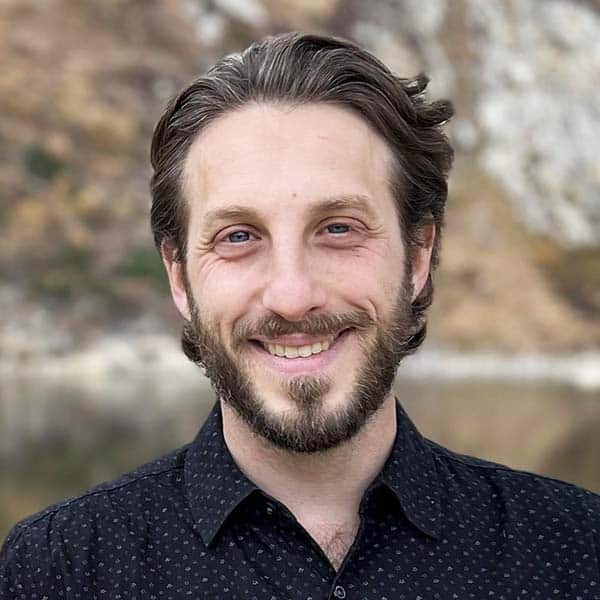
I’m Micah Fleitman, a licensed professional counselor in Arlington, Virginia. I’ve worked with people navigating religious trauma at nearly every stage, from those still inside a faith community to those who left years ago and are still sorting through what that meant.
What we offer:

Different approaches help us understand different parts of this experience. Some help us notice what guilt feels like in your body. Others help us understand the beliefs you’ve carried for years. Together, they give us different ways of making sense of what’s been happening.
A specific sermon, moment, or memory can still bring back the same fear it did the first time, even years later. EMDR gives your mind a way to work through that moment without having to narrate it out loud in full.
In session, this can look like:
Guilt and fear tied to religion often live in the body long before they show up in words, as a tightness in your chest before a decision, or a flinch at certain language or imagery. Somatic therapy starts with those physical reactions instead of asking you to explain everything out loud.
That tends to involve:
Part of you may still be bracing for punishment that isn’t coming, while another part has been quietly sitting with a question for years. IFS treats neither one as a flaw to correct. It works from the idea that each part developed for a reason, usually to keep you safe inside a very specific set of rules.
In the room, that looks like:
If a family or a community is where these beliefs took root, they’re often where it’s most useful to start understanding them. With Psychodynamic Therapy in Virginia, we look at how those earlier relationships may still be shaping what you expect from God, from yourself, and from other people today.
Session to session, that can look like:
A belief like “asking questions is dangerous” or “my doubt makes me a bad person” can become so familiar that you stop noticing it’s even a belief. Trauma-focused CBT brings it into view and tests whether it still holds up.
Sessions often include:

Healing through somatic therapy happens in phases. We begin by building your capacity to notice and tolerate body sensations, then gradually work with the trauma your body has been holding, and finally strengthen your ability to stay present and regulated in daily life.
Learning to notice what your body is telling you without judgment or fear is the foundation of somatic healing. You develop the capacity to tune into sensations, recognize where tension lives, and understand what different physical signals mean.
How this helps:
Using breath to calm your nervous system, shift from survival mode to safety, and create space between trigger and reaction. Breathing is one of the most accessible tools for regulating your autonomic nervous system.
How this helps:
Processing trauma stored in your body by working with small, manageable amounts of activation, allowing your nervous system to complete survival responses that got stuck during traumatic events.
How this helps:
Using gentle movement, spontaneous gestures, or physical expression to release what words can’t reach. Your body communicates through movement, and healing happens through allowing that expression.
How this helps:
Learning to anchor yourself in the present moment when dissociation, flashbacks, or intense sensations pull you away. Building internal resources to feel safe and present in your body.
How this helps:
Learning to move between distress and safety, building nervous system flexibility. You practice touching difficult sensations briefly, then returning to calm, gradually increasing your capacity.
How this helps:

Most people don’t immediately connect what they’re feeling to religious trauma. More often, it just looks like the way they already are. A few examples:
You might notice guilt showing up before you’ve even decided whether something was wrong, like it’s the automatic reaction rather than a response to anything specific. It can feel protective, as if staying guilty is safer than risking being wrong about something bigger. Understanding where that reflex came from can make it a little easier to question.
Ordinary decisions … what to say, who to spend time with, how to spend a Sunday … can start to feel like tests with real consequences. You might replay a choice long after it’s made, looking for a sign you got it wrong. That fear usually has a history, and it tends to loosen once you can see where it came from.
A thought crosses your mind and, almost immediately, another part of you checks it for danger, wondering if even having it was allowed. You might look outside yourself for reassurance before trusting your own read on something. Rebuilding trust in your own thinking tends to happen gradually, in small moments of being allowed to just wonder.
When a lot of energy has gone into following rules or managing how you’re perceived, it can be hard to say what you think or want underneath all of it. You might feel like you’re performing a version of yourself more than living as one. Therapy can help you find out what’s still there, underneath everything you were taught to be.
A conversation, a piece of music, or a familiar phrase can bring up a wave of anxiety before you’ve had a chance to think about why. You might avoid certain topics or people altogether just to sidestep the feeling. That reaction usually made sense once, and understanding it can take away some of its power now.

When guilt gets taught early, often as part of growing up in a specific childhood environment, it can start to feel less like an emotion and more like a fact about who you are.
If asking a question ever came with real consequences, losing approval, closeness, or a sense of belonging, it makes sense that questioning still feels risky now.
A fear that formed over years, through repetition, doesn’t tend to resolve the moment you decide it should. It usually eases in layers, as the nervous system slowly learns something different.
Leaving, or being distanced from, a community can bring a kind of grief and loss that’s easy to underestimate, even when leaving was the right decision.
Yes. Healing from religious trauma doesn’t require leaving your faith, and it doesn’t require staying either. It’s entirely possible to keep what feels true to you and let go of what was rooted in fear.
You don't have to decide what you believe before we meet.
You’re allowed to be uncertain, here and afterward. You don’t need to have your beliefs sorted out, or even know what you want to happen with your faith, before the first session. It’s mostly about understanding what’s been going on and what would feel helpful to talk through.

Religious trauma describes the lasting emotional impact of growing up in, or being part of, a religious environment where fear, guilt, or control played a bigger role than safety. It doesn’t require a single dramatic event. For many people, it builds slowly, through years of rules, expectations, and consequences for questioning any of it.
There’s no single checklist. If a religious environment left you feeling afraid, ashamed, or unable to trust your own thoughts, that experience is worth taking seriously, whether or not it matches a textbook definition.
The terms are often used interchangeably, though some people use “spiritual trauma” to describe harm tied to a broader belief system, and “religious trauma” for harm tied to a specific religion or community. For most people, the experience and the therapy tend to look similar either way.
Spiritual abuse usually refers to specific controlling or manipulative behavior within a religious context, while religious trauma describes the lasting impact that behavior can leave behind.
The signs can be easy to miss because they often look like personality traits rather than a response to what happened.
If guilt, fear, or self-doubt seem to trace back to a specific religious upbringing or community, that pattern is worth exploring with a therapist rather than sorting through alone.
Yes. Religious trauma isn’t about whether your faith is real or valid. It’s about the fear, guilt, or control that got mixed in with it along the way. Plenty of people work through religious trauma while staying in their faith, changing their relationship to it rather than leaving it behind.
Left unaddressed, religious trauma can shape how safe it feels to trust yourself, question anything, or feel worthy without earning it. It can also affect relationships, especially ones where disagreement or vulnerability feel risky. Left on its own, it tends to fade slowly at best, since guilt and fear that were taught over years usually need somewhere to be understood, not just time to pass.
A nervous system that spent years anticipating punishment or judgment can stay on high alert long after the original environment is gone, treating an ordinary question or disagreement as if it carried the same stakes it once did.
There’s no fixed timeline. Some people notice change within a few months of therapy, while deeper patterns, especially ones tied to childhood, tend to loosen more gradually.
It usually happens gradually, through repeated messages that certain thoughts, questions, or parts of yourself were dangerous or unacceptable, reinforced by real consequences like judgment, isolation, or loss of belonging.
Specific language, imagery, music, or even a particular tone of voice can bring the old fear back, sometimes long after someone has left the environment where it started.
It can, especially when the religious environment involved repeated fear, control, or punishment over a long period. The reactions can look a lot like complex trauma: hypervigilance, a harsh inner critic, and difficulty trusting people or yourself.
Not always, but they can overlap. Religious trauma describes the source of the harm, while complex PTSD describes a pattern of symptoms that can result from it.
For most people, yes. It won’t rewrite your history or hand you a finished set of beliefs, but it can loosen how much fear and guilt still get to decide things for you day to day. There’s no fixed number of sessions, since these patterns usually developed over years, but many people notice some relief within the first few months.
Most people benefit from a combination: something that addresses the fear response itself, and something that looks at the specific beliefs underneath it, at whatever speed feels tolerable.
There’s no required starting point. Some people want to begin with the fear and anxiety in their body; others want to start by naming the beliefs out loud for the first time. Both are reasonable places to begin.
Approaches like EMDR and relational or attachment-focused therapy are often used together, since religious trauma tends to involve both a fear response in the body and beliefs formed inside specific relationships.
Part of this involves learning to recognize internal conflict, like a protective part that still expects punishment, and helping your nervous system register that the danger has passed.
Healing tends to involve separating the fear from the belief, understanding where a specific rule or reaction came from, and slowly building the ability to trust your own thoughts again. It doesn’t require leaving your religion, and it doesn’t require staying either. The goal is understanding what was fear and what’s genuinely yours, so you can decide the rest for yourself.
Unlearning a pattern doesn’t mean forgetting it happened. It usually means noticing the pattern as it starts, understanding what it was protecting you from, and practicing a different response, a little at a time.
That’s a personal question, and not one a therapist can answer for you. For a lot of people, faith stays an important part of healing, and there’s room for that here. Rather than offering religious guidance, therapy focuses on the fear, shame, and guilt that got tangled up with faith, so that whatever you decide about God feels more like a choice than a reflex.
People come for a wide range of reasons: some are still part of a faith community and want help with guilt or fear that feels disproportionate, others have left and are still sorting through what that meant, and some are questioning beliefs they grew up with for the first time.
This can include people simply trying to figure out where a specific fear or rule first came from, as well as people navigating a specific community’s expectations around identity or belonging.
This can include LGBTQ+ individuals working through purity culture or rigid teachings about gender and sexuality, and anyone whose sense of self got tangled up with a specific community’s rules about who they were supposed to be.
Rules and expectations that felt rigid or confusing to begin with can be especially hard to navigate for neurodivergent people, and that combination is welcome here too.
It’s reasonable to ask how a therapist thinks about faith, whether they’ll try to influence what you believe, and what a typical session with them looks like.
A first conversation should feel like an opportunity to ask questions, not an evaluation. You’re allowed to ask about approach, pace, and fit before deciding anything.
Look for someone with real experience in religious trauma counseling specifically, not just general trauma therapy, and someone who’s upfront about not trying to shape what you believe.
Yes. Sessions are available via telehealth to anyone physically located in Virginia.
Session rate: $200 per 53-minute session
Insurance:
Location:

There can be room for both your questions and your values.
A free 30-minute consultation isn’t about finding the right answer right away. Sometimes the first step is just having room to ask the question. There’s no pressure to know exactly what to say or what comes next.
Book a complimentary 30-Minute Consult